A Practical Guide to Packing Light for Trips of Almost Any Length
Travelling with a single carry-on bag is easier than many people think. This guide covers how to choose clothing, organise essentials and avoid the common mistakes that lead to overpacking.

Most travellers have had the experience of hauling a heavy suitcase up a flight of station stairs, only to realise halfway through the trip that half its contents have not been touched. Packing light is one of the simplest ways to make travel easier, cheaper and less stressful. It is also a skill that improves with practice.
The good news is that a week-long trip and a month-long trip often require roughly the same amount of luggage. Beyond a certain point, you are not packing for more days; you are simply packing for the laundry cycle.
Start With the Bag, Not the Wardrobe
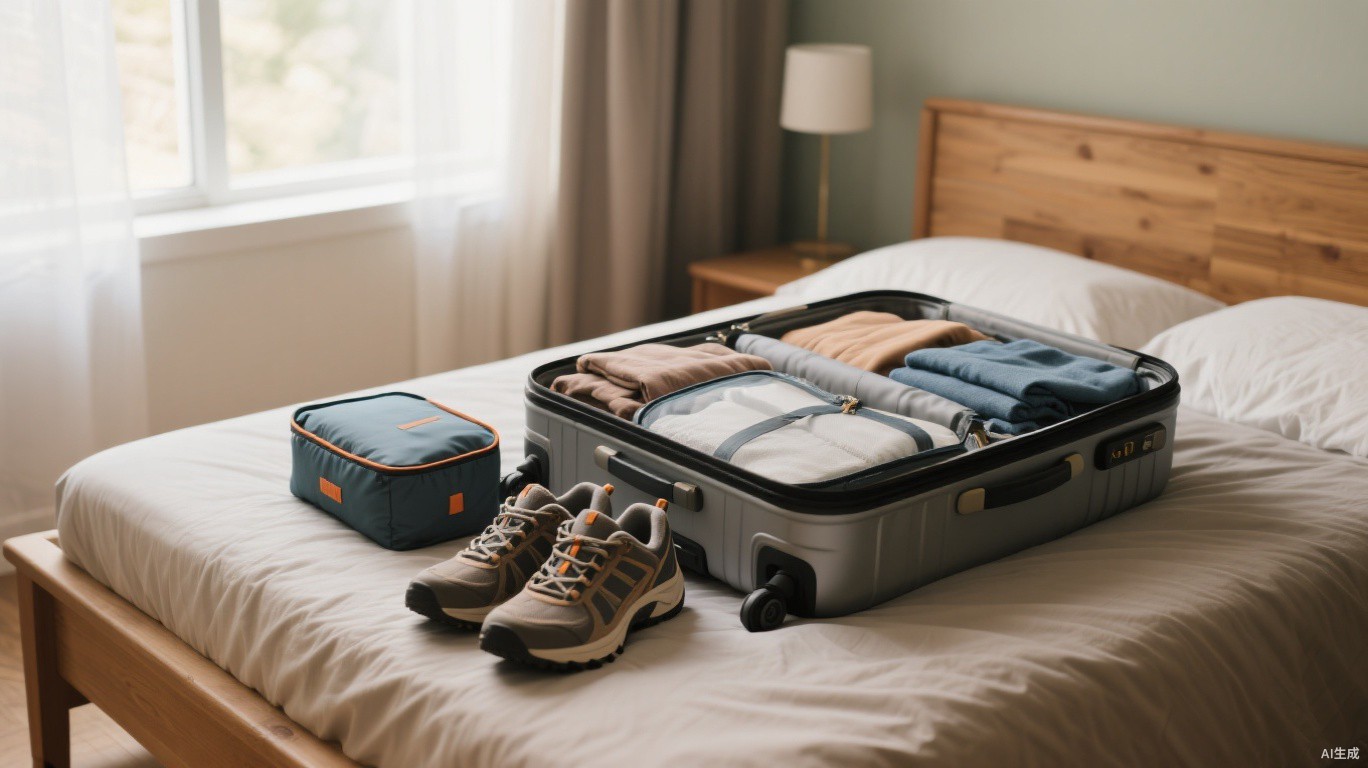
Choosing your bag first creates a natural limit. A carry-on suitcase or a travel backpack in the range of 30 to 40 litres is enough for most trips if packed thoughtfully. Check your airline's size and weight limits before you buy, as these vary widely, particularly among low-cost carriers.
Backpacks are better for cobbled streets, stairs and rural areas. Wheeled cases are easier on the back in airports and cities with smooth pavements. Neither is objectively better; the right choice depends on where you are going and how you plan to move around.
Building a Flexible Wardrobe
The core principle of light packing is versatility. Every item should work with several others. Choosing a limited colour palette, typically two or three neutral base colours with one or two accents, makes it much easier to mix and match.
A widely used framework for a trip in moderate weather looks something like this:
- Two pairs of trousers or skirts, one of which can be worn for slightly smarter occasions.
- Four to five tops that can be layered.
- One warm mid-layer, such as a light jumper or fleece.
- One packable waterproof jacket.
- Two pairs of shoes at most, with the bulkier pair worn while travelling.
- Enough underwear and socks for five to seven days.
Fabrics make a real difference. Merino wool and many technical synthetics dry quickly, resist odours and can be worn more than once between washes. Cotton is comfortable but heavy and slow to dry, which matters if you plan to wash items in a hotel sink.
The question is not whether you might need something, but whether you could buy or borrow it at your destination if you did.
Toiletries and Small Essentials
Toiletries are often where bags quietly become heavy. Decanting products into small reusable containers saves space and keeps you within liquid limits for hand luggage. Solid alternatives, such as shampoo bars and solid deodorants, avoid liquid restrictions altogether in many airports.
Many hotels provide basics such as soap and shampoo, and almost every destination has pharmacies or supermarkets where you can buy what you forgot. Unless you need a specific product for medical or skin reasons, there is little point carrying large quantities from home.
Electronics deserve a moment of thought too. A single multi-port charger and one universal travel adaptor can replace a tangle of separate plugs. Consider whether you really need a laptop, tablet and e-reader, or whether one device can cover most of your needs.
Packing cubes or simple zipped pouches help keep a small bag orderly. Grouping items by category, such as tops in one cube, underwear in another and cables in a third, makes it easy to find things without unpacking everything. Rolling soft garments tends to save space and reduce creasing, while structured items like blazers are better folded.
A useful habit is to lay out everything you plan to bring, then remove a third of it. Most experienced travellers say the items they leave behind at this stage are rarely missed. A flight attendant based in London who spends much of her life on short trips described her rule simply: if she has not worn something on the previous two trips, it stays at home.
Handling Laundry on the Road
Planning for laundry is what makes a small bag work for longer trips. Options include hotel laundry services, self-service launderettes, which are common in many European cities, and washing a few items in a sink with a small amount of travel detergent. Booking an apartment with a washing machine for part of a longer trip can be especially helpful.
Timing laundry for the middle of a stay, rather than the night before leaving, gives clothes time to dry fully. A lightweight travel washing line or a few clips can turn a hotel bathroom into a drying area.
The Benefits Beyond Convenience
Packing light saves money on checked-bag fees and removes the wait at baggage carousels. It also reduces the risk of lost luggage, which can derail the start of a trip. But many travellers say the biggest change is psychological. With less to carry and keep track of, it becomes easier to change plans, take an earlier train or wander through a city on the way to the hotel.
It takes a trip or two to find the right balance, and everyone's list will look a little different. Once the habit sets in, though, a heavy suitcase starts to feel less like a safety net and more like something that gets in the way.