Practical Ways Families Are Setting Healthier Everyday Screen Habits at Home
Strict bans rarely last, but clear routines often do. A look at how households are setting realistic boundaries around phones, tablets and streaming without turning every evening into an argument.

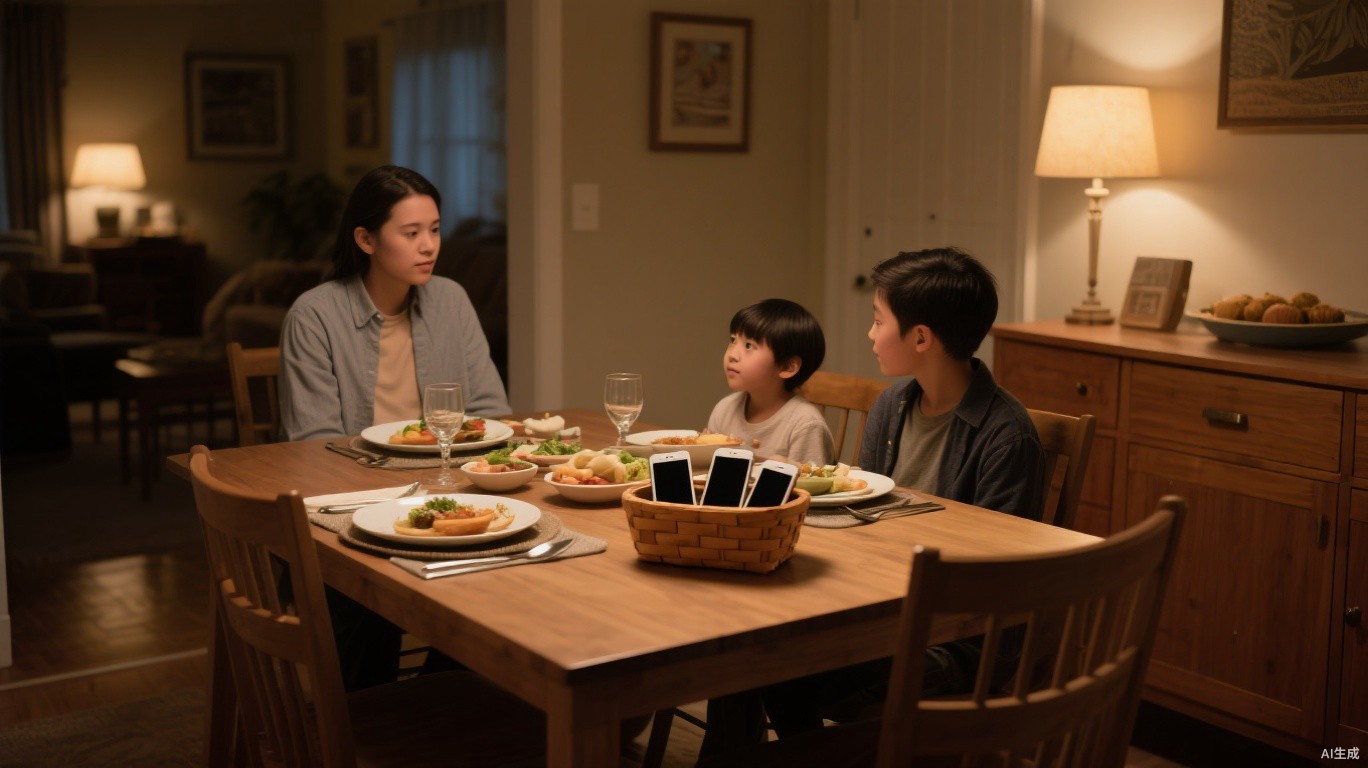
Screens are woven into almost every part of family life, from homework and group chats to video calls with grandparents and evening streaming. Most parents do not want to remove technology altogether, and many could not if they tried. What they want is a balance that feels manageable. Across households in Europe, North America and Australia, a set of practical habits is emerging that focuses on routine rather than restriction.
Why rigid rules often fail
Many families start with firm limits, such as a fixed number of minutes per day. These can work for young children, but they often break down as kids grow older and screen use becomes tied to schoolwork, friendships and hobbies. A single number cannot distinguish between an hour of video editing for a school project and an hour of aimless scrolling.
Rigid rules also tend to put parents in the role of permanent enforcer. Arguments about the last five minutes of a game can overshadow the bigger goal. Family educators increasingly suggest focusing on when and where screens are used, and on what they are displacing, rather than counting every minute.
Routines that tend to stick
Families who report the most success usually rely on a handful of simple, predictable habits. Common examples include:
- Keeping phones out of bedrooms overnight, with a shared charging spot in the kitchen or hallway.
- Screen-free meals, which apply to adults as well as children.
- A short buffer before bedtime when devices are put away and lights are dimmed.
- Homework done first, entertainment afterwards.
- Regular screen-free activities at weekends, such as a walk, a board game or cooking together.
These routines work partly because they are easy to remember and do not require constant negotiation. Once a charging basket by the door becomes normal, it stops being a daily battle.
Sophie, a mother of two in Melbourne, said moving the chargers was the single most effective change her family made. "We stopped arguing about bedtime phones because the phones simply live downstairs at night," she said. "My own sleep improved too, which I did not expect."
Adults set the tone
One theme comes up repeatedly: children notice what adults do. A parent who insists on phone-free dinners but checks email at the table sends a mixed message. Many families find it easier to agree on household rules that apply to everyone, with exceptions discussed openly, such as a parent on call for work.
Children notice what adults do, and household rules land better when they apply to everyone at the table.
This does not require perfection. Simply saying aloud, "I am putting my phone away now so we can talk," models the behaviour without lecturing. Older children often respond well when they see that parents are working on their own habits as well.
Talking rather than policing
As children reach their teens, conversations become more useful than controls. Parental settings and app timers have a place, especially for younger users, but teenagers can usually find ways around them. Discussing why certain apps feel compulsive, how notifications are designed to grab attention, and how to handle unkind messages builds skills that last beyond the family home.
Some families hold a short monthly check-in about technology. Everyone, including parents, says what is working and what is not. A teenager might ask for more time on a game played with friends; a parent might admit to too much late-night scrolling. Agreements are adjusted rather than imposed.
A school counsellor in Dublin said she encourages families to separate types of screen time. "Talking with friends, creating something and passively watching are very different," she said. "When young people learn to notice how each one makes them feel, they start making better choices on their own."
Reducing screen time works best when something appealing fills the gap. Children who have access to sport, music, outdoor play or simply friends nearby tend to rely less on devices for entertainment. For many families the practical constraint is time and cost, so low-effort options matter: a library card, a ball in the park, a shared recipe on a Sunday afternoon.
Boredom is not always a problem to solve. Many parents report that a little unstructured time, without a screen to fill it, often leads children to invent games, read or draw.
Finding a household balance
There is no single correct amount of screen time, and the right approach will differ between a toddler, a ten-year-old and a sixteen-year-old. What tends to help is clarity, consistency and a willingness to revisit the rules as children grow. Families who treat digital habits as an ongoing conversation, rather than a fixed regime, generally find fewer conflicts and more trust.
The aim is not a home without technology, but one where technology fits around sleep, meals, conversation and play rather than crowding them out. Small, steady routines are often what makes that possible.